Career After a Break: How to Return to Your Profession After Maternity Leave, Relocation, Burnout, or Any Other Crisis
Every career break is always one small life. Although on your resume it looks like nothing more than a small empty gap between two lines, an entire era can fit into it: a child, a move to another country, a divorce, illness, caring for a loved one, burnout, emigration, war, recovery, an attempt to put yourself back together piece by piece and understand where you are and what is happening with your professional life.
And then, one day, the moment comes to start moving forward again and bring this difficult — or, on the contrary, wonderful — break to an end. You open your old resume, look at your previous positions, achievements, projects, and feel as if you have found a luxurious dress in your closet that you bought in a boutique ten years ago. It seems to be yours. It seems it once fit perfectly. But now it is unclear whether you can even get into it at all and whether it still suits your style.
The most unpleasant thing about a career break is not the break itself or its reasons, but the fact that it is always hard to return afterward. You are already a different person, one way or another, and your attitude toward skills, workload, stress, schedule, and the profession itself may — and should — also be different. That is why any career break is the end of one era… And the beginning of a new one! The main thing is to meet it properly.
First, figure out what happened to you during the break

Before returning to the job market, you need not simply rewrite and update your resume, but conduct a revision. You need to understand what condition you are in now, that is, what condition you are in as you prepare to start working again. The requirements you should set for your new workplace will depend on this. After all, simply returning is not enough — you need to understand where exactly you are returning to.
Different types of breaks also require different strategies. For example, if you took a break because of burnout, it would be unreasonable to throw yourself back into the 24/7 schedule that led you there and agree to work in an office on the other side of the city, with a two-hour commute each way. If you are returning after maternity leave, you need a job that offers additional opportunities for women with children: extra days off, a company childcare center, and so on. I, for example, have taken breaks several times in my life, and one of them was connected with the death of someone close to me, after which I had to switch temporarily to fully remote work because I needed to deal with related matters.
In order not to blindly send responses to job postings, you need to clearly understand:
- what exactly caused my career break;
- what changed during this time in my energy, health, family, country, finances;
- which field/specialty/schedule I definitely do not want to return to;
- which tasks I can still do well;
- which skills may have become outdated and need refreshing;
- which skills I acquired during the break, even if they do not look “office-like” — do you know what kind of time management a young mother can have? Wow!;
- how much workload I can realistically handle during the first two or three months of work;
- what matters most right now: money, stability, a flexible schedule, growth, a team, status, remote work, my value;
- which conditions I can agree to temporarily, and which are absolutely taboo;
- what first step I am ready to take so that it does not break me in the very first week.
It is especially important to look closely at the skills you may have acquired outside of traditional work. I always advise people not to confine their interests and lives within the boundaries of one job, to try hobbies and travel, not to be afraid of difficulties, because real life sometimes teaches things that work never will. For example:
- Maternity leave often strengthens organization, the ability to switch quickly, negotiation skills, patience, and the ability to make decisions in absolute chaos — although for some reason maternity leave is often shyly hidden in resumes under some other explanations.
- Relocation develops adaptability, independence, the ability to understand new systems, and the ability to find common ground with people from another culture.
- Caring for a loved one teaches responsibility, endurance, planning, working with documents, and dealing with bureaucracy.
- Recovery after a crisis sometimes gives a very mature understanding of your boundaries, resources, pace, and of what kind of work you do best — and what kind of work is better to delegate or remove altogether.
You cannot simply take all of this and write it in bold in your resume as “I heroically survived,” but it is important for you to understand it yourself: you were not in a vacuum, you were living, solving problems, and perhaps you became much stronger in things for which the job market simply does not yet have beautiful names. Not yet.
Do not apologize for the break — explain it
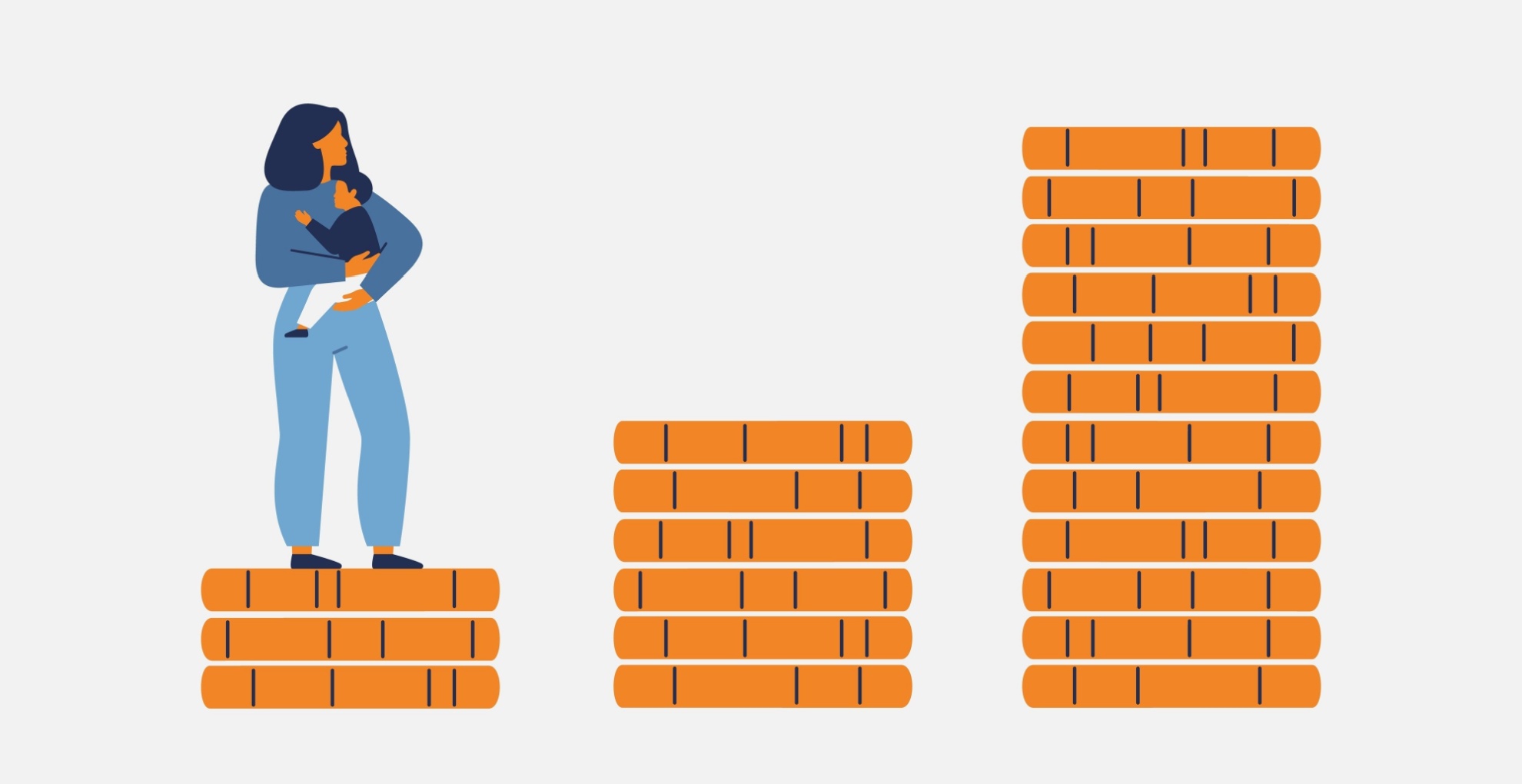
The biggest mistake after a career break is approaching an employer like a guilty schoolgirl walking up to the blackboard. A woman starts diminishing herself in advance: “I haven’t worked for a long time, so I’ve probably fallen a little behind,” “I was on maternity leave, but I really want to try,” “I went through a difficult period, so I’m ready to grab any opportunity.” This sounds like asking for a discount, not honesty, and people immediately start treating you with condescension. Do you really need that? A break is not your fault, even if you chose it consciously and voluntarily. There is no need to be ashamed of it.
What an employer needs to understand instead of hearing your apologies are three things:
- why there was a break;
- whether you are ready to work now and what guarantees there are that you will not change your mind;
- what value you can bring.
You do not need to tell the whole story of your divorce, sleepless nights, relocation, illness, complicated relationships, and so on. Translate your drama into professional business language. Here is how you can do it:
After maternity leave. Bad version: “I was on maternity leave for three years, so I’ve probably fallen a little behind, but I really want to return.” Better: “For the past three years, I was on maternity leave. I am now returning to work and updating my skills in analytics and client communication. I am interested in roles where my experience in project management and client interaction will be useful from the very first months.”
After relocation. Bad version: “Everything fell apart for me, and now I’m looking for anything at all.” Better: “After relocating, I adapted to a new country and am now looking for a role where I can use my experience in sales, knowledge of an international environment, and strong client communication skills. I am ready to consider positions where flexibility, independence, and the ability to quickly enter a new context are important.”
After burnout. Bad version: “I had burnout, so I didn’t work for a long time.” Better: “I took a career break to recover and reassess my professional priorities. I am now considering positions with a clear area of responsibility and a sustainable pace, where I can effectively apply my experience.”
After a personal crisis or family circumstances. Bad version: “I went through a difficult period, so I dropped out of work.” Better: “During the last period, I was dealing with family matters. I am now returning to the profession and considering roles where I can apply my previous experience in management, communication, and process organization.”
The same principle applies to your resume. Do not disguise the break with strange dates, especially if they do not add up — this can easily be noticed. If during this time you had freelance work, volunteering, a family business, studies, consulting, project help for acquaintances, or one-off tasks, list it separately! Even a small project is better than a completely empty section, even if it shows your connection to the profession only indirectly. In short, know how to weave things in.
Checklist for updating your resume
Here is a list of what you should specifically do with your resume after a break:
- briefly and calmly indicate the career break, if it was a complete one;
- add freelance work, volunteering, project help, studies, or a family business, if you had any;
- update the top section: who you are today, what roles you are looking at, what value you bring;
- remove outdated tasks that you no longer want to sell to the market;
- add recent courses, tools, languages, and certificates if they are related to your future role;
- prepare a short explanation of the break for interviews so that you do not have to improvise and get flustered, especially if the topic is still painful for you.
Return by building a “bridge,” not by jumping

After a break, many people set themselves up with an overly harsh fork in the road: either immediately find a “big normal job,” or consider their return a failure. This is where the panic comes from. It feels as if you need to immediately prove your former level, return to the same position, the same salary, the same pace, and preferably look as though the career break never happened at all. But in reality, returning works better through a bridge — a small but real professional step that will not instantly lift you back to the top like a ladder, but will reconnect you with the market.
A bridge can be:
- a small paid project;
- a temporary contract;
- a consultation;
- freelance work;
- helping an acquaintance with a business;
- an internship for experienced specialists;
- a project at a former company;
- participation in a professional community;
- training in a new professional direction with practice.
For example, after maternity leave, you do not necessarily have to immediately return to the role of department head if you do not yet understand how to combine it with your new life. You can start with a project for ten hours a week: rebuild a client database for a small business, help an entrepreneur friend with a content plan, conduct a process audit, do analytics, set up a newsletter, and so on. After a month, you will no longer have the abstract “I am returning,” but living proof of it and a fresh foundation. After that, you will be able to aim for your previous level again — it will simply be emotionally easier. This approach is relevant for any type of break, including a break due to burnout. A loud brand and a high position can pull you back into the very place you struggled so hard to get out of.
Build a new foundation: skills, contacts, money, and routine

In order for your return to the market to be smooth and safe, you need to have support prepared in several areas in advance. If one area dips, another will support you. Suppose you have strong skills but no contacts. Or you may have contacts but no energy. You may have energy but no financial cushion. You may have a huge desire to return, but your schedule may be so packed with family matters that no employer — and you yourself — will be able to tolerate it. That is why, before actively entering the market, it is worth strengthening four areas and making sure they are more or less balanced and complement each other.
1. Skills
But please, no “I’ll just take five more courses, and then I’ll be ready!” You do not need to study everything in a row. After a break, the temptation to cover anxiety with certificates is especially strong: a course on neural networks, a course on marketing, a course on personal branding, a course on English, a course on negotiations, and then another course, and another, and another… Instead, choose one or two gaps that genuinely threaten your future and may prevent you from returning. For example, refreshing your CRM knowledge and improving your English is a solid foundation.
2. Contacts
After a break, writing to people is simply scary. It feels as if everyone has gone far ahead, while you have shown up with a sign saying, “Help me return to normal life!” In reality, old connections often turn out to be the gentlest entry point. Former colleagues, managers, clients, classmates, and industry acquaintances already know you. It will be easy for them to remember your working style, your responsibility, and your strengths. Write not with a request like “Find me a job,” but: “I am returning to the profession, looking at such-and-such roles, and would be grateful if you kept me in mind for suitable opportunities. If you have 20 minutes, it would also be useful for me to learn what has changed in the field.” Personally, I gladly respond to such requests and even give a chance to those employees inside my company if they are still interested in working with me. A healthy environment will not perceive your break as a personal insult. There is nothing to be afraid of here.
Money
Returning may take time. The first role may turn out to be below your expectations. The search may drag on. Training, a nanny, documents, transportation, equipment, diploma translations, consultations — all of this also costs money. That is why you need not only a list of vacancies, but also a financial plan: how many months you can search, what minimum income is acceptable, where your line of compromise is, which expenses can be temporarily reduced, and what job you are ready to take as a transitional one. Without this understanding, there is a risk of grabbing the first offer that comes along purely out of fear.
Routine
After maternity leave, illness, burnout, or relocation, it is impossible to simply press the “office mode” button and, starting Monday, withstand calls, deadlines, correspondence, and everything else the way you did before. Start training your working rhythm in advance: two or three hours of focused work a day, keeping a calendar, regular sleep strictly within set hours, an “almost-office” place to work, two test tasks a day as a warm-up, reading professional literature for 20 pages before bed… Little by little, you will ease back into your former rhythm. The main thing is not to forget to change and adapt it — it should not be “exactly like before,” but comfortable and productive!
Checklist before ending the break

So, before actively entering the market, check whether you have the minimum foundation:
- an updated resume and a short, calm explanation of the break;
- an understanding of which roles you are looking for and why;
- a financial minimum below which you are not ready to go;
- one or two updated skills that matter specifically for your field;
- a list of 10–15 people you can write to about your return;
- several examples of old or new results that confirm your value;
- a working routine, at least in draft form;
- readiness to go through several rejections without concluding, “That’s it, no one will ever hire me again.”
The last point is especially important. Rejections after a break hurt more than usual because they touch the fear of “I really did fall out.” So agree with yourself in advance: rejection is not a sentence and not a diagnosis. It is part of the market. Sometimes your experience is not the right fit, sometimes the budget is not right, sometimes the format does not match, and sometimes they simply chose another person. Your task is not to receive confirmation of your own value from the very first interview, but to gradually reintegrate into the professional environment.
And one final piece of advice: behave normally in interviews. Under no circumstances act guilty! No apologetic tone and no excuses. A break is a fact of your biography, not a personal characteristic. Answer questions directly, honestly, and briefly. You are not asking for a “second chance” — you are simply looking for a job or a project, like everyone who came before you and everyone who will come after you. Yes, after a break, something may indeed have slipped, but nothing is beyond repair. After all, life cannot consist only of rises, and sometimes simply standing still instead of falling is already an achievement. Whatever the case, you are moving forward again — and you are ready!

Today, when someone says “women’s emancipation,” we almost involuntarily imagine doors being ceremoniously opened. As if society suddenly realized in one moment that women could do everything men could do,...

We are used to hearing famous female names most often in “beautiful” industries. Let’s be honest: a female millionaire who built a beauty empire, a fashion brand, a media company,...

One of the most questionable compliments a woman can hear on a male team is: “You’re totally one of us!” At first glance, it sounds like praise: you have been...